31 March 2026
|
Story Christelle du Toit
|
Photo Supplied
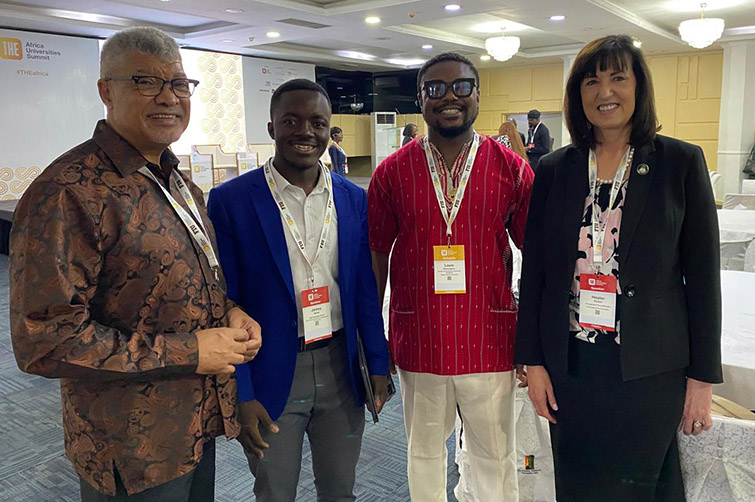 Prof Hester C. Klopper, Vice-Chancellor and Principal of the University of the Free State (UFS), set the tone early in deliberations at the Times Higher Education (THE) Africa Universities Summit in Nairobi.
“The summit comes at a time when African universities are being asked to respond to increasingly complex realities.”
Prof Hester C. Klopper, Vice-Chancellor and Principal of the University of the Free State (UFS), set the tone early in deliberations in Nairobi today – not as a statement of intent, but as a recognition of where institutions already find themselves.
From keynote to context: framing the conversation
“For us, this is about how we translate our strategy into practical action – how we build institutions that remain relevant, adaptable, and grounded in the societies we serve.”
The keynote did not linger on abstract frameworks. Instead, it stayed close to the pressures shaping African universities: shifting expectations, constrained resources, and the need to remain responsive while holding institutional direction.
This set the tone for a discussion that moved quickly from ideas to application.
What resilience looks like in practice
Throughout the session, the focus shifted from defining resilience to understanding how it is built in practice – through institutional structures, investment in people, and stronger links between academic work and societal realities.
The emphasis was on what could be done now – within existing contexts – rather than what might be possible under ideal conditions.
Linking strategy to societal impact
For the University of the Free State, this thinking reflects a broader shift that is already underway.
“Our participation is also an opportunity to engage with peers across the continent on what resilience looks like in context.”
The university’s current strategic direction places growing weight on responsiveness and impact, with academic work increasingly shaped by how it contributes to society in tangible ways.
Grounded in African realities
“There is no single model. What matters is whether our teaching, research, and partnerships are making a tangible difference where we are.”
The point landed clearly.
While global frameworks continue to shape higher education conversations, the discussions in Nairobi reflected a move towards context-driven approaches – solutions defined by local realities rather than external templates.
Across sessions, institutions returned to this idea: relevance is built, not imported.
Beyond the podium: strengthening partnerships
Away from the panel, the conversation continued.
The UFS delegation engaged with counterparts from across the continent, exploring opportunities for collaboration – from joint research to student mobility and partnership development.
These interactions extended the keynote’s focus, grounding it in relationships that enable institutions to work across borders while responding to shared challenges.
Carrying the conversation forward
As the summit progressed, one shift stood out: a move away from broad commitments towards more deliberate, implementable approaches.
The Vice-Chancellor’s contribution reflected this change in tone – less about what universities aspire to be, and more about what they are choosing to become.
For the UFS, the engagement in Nairobi formed part of a longer trajectory – one that connects institutional strategy with continental collaboration, and academic work with the realities it is meant to serve.